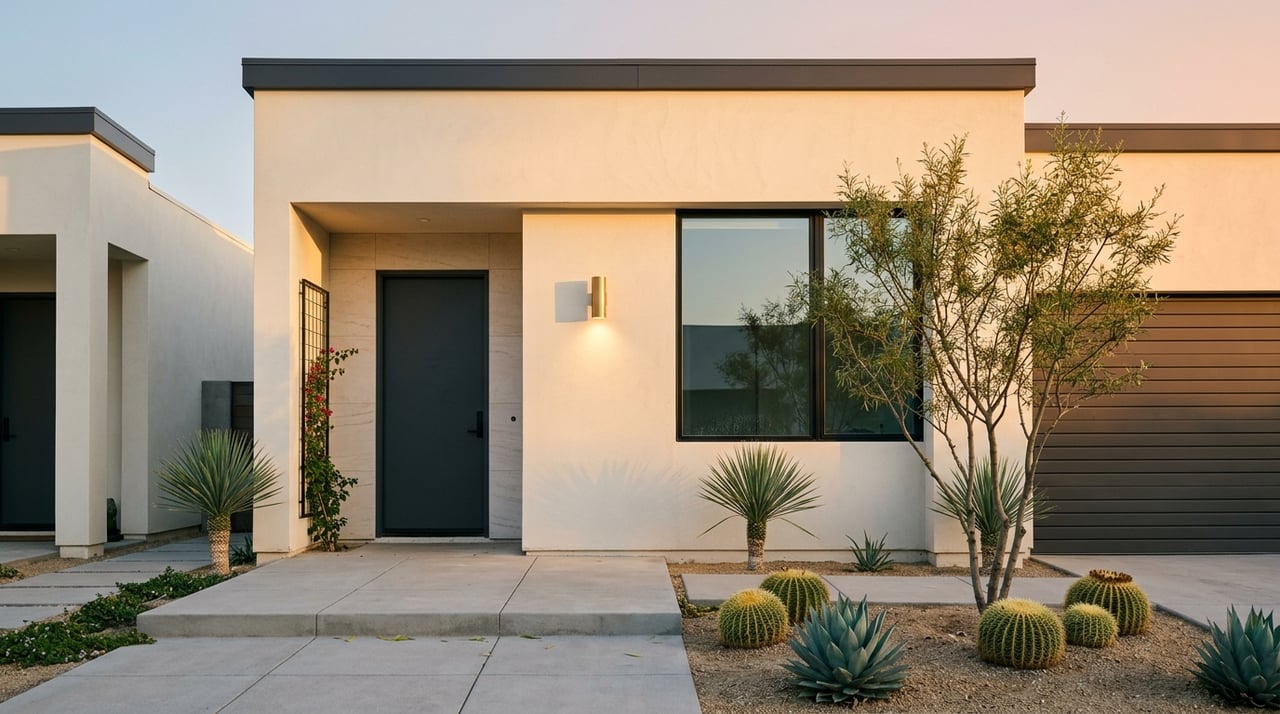
If you picture Gilbert as a town of only detached houses, you might miss options that fit your budget, maintenance goals, or lifestyle better. That matters when you are trying to balance monthly costs, upkeep, and the rules that come with community living. In Gilbert, the home style you choose is only part of the story. The ownership structure and HOA setup can shape your costs and day-to-day experience just as much, so let’s dive in.
Gilbert housing mix at a glance
Gilbert is still mostly a detached-home market, but it is not limited to that. The Town of Gilbert’s 2025 Consolidated Plan, using 2019 to 2023 ACS estimates, reports that 86.3% of the housing stock is low-density single-family, while 13.4% is multi-family development with two or more units in the structure.
That means most buyers will still see plenty of traditional single-family homes. At the same time, attached and multi-family options are a meaningful part of the local market, especially as the town allows accessory dwelling units on single-family-zoned properties and works toward more middle housing near the Central Business District.
Gilbert’s 2020 to 2024 Census QuickFacts estimates also show a 73.1% owner-occupied housing rate. The same source reports a median owner-occupied home value of $575,100, median monthly owner costs with a mortgage of $2,174, and a median gross rent of $2,110.
For you as a buyer, the big takeaway is simple: Gilbert offers more variety than many people expect. If you compare homes carefully, you may find that an attached home, townhome-style property, or condo gives you a different mix of price, upkeep, and community features than a detached house.
Single-family homes in Gilbert
Single-family homes are still the dominant housing type in Gilbert. In many cases, they give you the most direct control over the structure and lot, which is why they often appeal to buyers who want more separation and a more traditional ownership setup.
But a detached exterior does not automatically mean there is no HOA. In Arizona, a planned community association can be created to own and operate parts of a community and assess owners for shared costs, so a single-family home can still come with rules, dues, and community responsibilities.
That is an important distinction when you tour homes. Two detached homes may look similar from the street, but one may be in an HOA-managed planned community while the other is not.
What single-family buyers should watch
When you look at detached homes in Gilbert, ask about more than the lot size or floor plan. You also want to know whether the property is part of a planned community and what that means for your monthly budget and maintenance responsibilities.
A detached home in an HOA may still include rules on exterior changes, parking, amenities, or landscaping. So even if you are shopping for more independence, the recorded community documents still matter.
Townhomes in Gilbert
Townhomes are often one of the most misunderstood options for buyers. A townhome is mainly a building style, typically a two- or three-level home attached to a similar home by a shared wall.
That sounds straightforward, but the legal structure can vary. A townhome-style property may be part of a planned community or, in some cases, organized as a condominium, and that difference can affect ownership boundaries, maintenance, and HOA rules.
For you, this means a townhome is not defined by architecture alone. You need to know what the recorded documents say you own and what the association is responsible for.
Why townhomes appeal to many buyers
Townhomes can offer a middle ground between a detached home and a condo. You may get an attached layout with less exterior maintenance than some single-family homes, while still having a more house-like feel than a typical condo setup.
That said, the exact tradeoff depends on the community. In one development, the HOA may cover major exterior items. In another, your responsibilities may be broader, so it is worth reviewing the details before you make assumptions.
Condominiums in Gilbert
Under Arizona law, a condominium is real estate where some portions are separately owned and the rest is owned in common by the unit owners. That shared ownership structure is a major reason condo living feels different from other home types.
In a condo, common elements and common expenses are built into how the community operates. Assessments are tied to those shared costs, and the association budget may also include reserve allocations for future repair or replacement needs.
For buyers, condos often mean a higher level of shared infrastructure and shared responsibility. That can simplify some maintenance, but it also makes the financial health and rules of the association especially important.
What makes condos different
The main difference is not just that condos are often attached homes. It is that ownership and maintenance are structured around shared property.
That can affect everything from exterior repairs to insurance coverage to monthly dues. If you are comparing a condo with a townhome or detached house, do not stop at square footage or finishes. Look closely at what is individually owned, what is shared, and how the costs are divided.
How HOA living works in Gilbert
If a Gilbert property is in a planned community or condominium, the HOA is a real part of ownership, not a small side detail. Arizona law ties planned communities and condominiums to mandatory assessments that help cover operating costs and, in many cases, reserve funding for future expenses.
That means HOA dues are separate from your mortgage payment. They are part of your total monthly housing cost, and what they cover can vary from one community to another.
Gilbert’s local resources also show how HOA living affects daily ownership. The Town says HOAs and property managers are responsible for maintaining stormwater infrastructure on private property, the Town delivers reclaimed water to HOAs for landscape irrigation, and residents in HOA communities may need to follow HOA pool-draining policies in addition to town rules.
In other words, HOA living can shape more than landscaping or common areas. It can affect how parts of the community are maintained and how certain day-to-day property issues are handled.
Arizona transparency rules buyers should know
Arizona requires HOA transparency in ways that matter to buyers. Planned-community and condominium boards must generally hold open meetings, with annual meetings and advance notice for board meetings after declarant control ends.
That matters because governance can affect your ownership experience over time. If you buy into an HOA, you are buying into a system of rules, budgets, meetings, and decisions that help shape the community.
What happens at resale and closing
When a home in an HOA or condo community is sold in Arizona, the association must provide a resale packet. That package includes documents such as the bylaws, rules, declaration, association contact information, current assessments, insurance coverage, reserve information, the current operating budget, the latest annual financial report, the latest reserve study if there is one, and a summary of pending lawsuits.
This is one of the most useful parts of the process for buyers. It gives you a clearer look at the community’s finances, governance, and any issues that could affect future costs or ownership experience.
Arizona law also allows an association to charge up to $400 for resale-disclosure and transfer-related services, with limited rush and update fees allowed in some cases. That fee is separate from monthly dues and is part of the closing process.
Questions to ask before touring Gilbert homes
Before you spend time touring homes, it helps to ask a few smart questions up front. Doing that can save you from falling for a floor plan that does not match your budget or comfort level with HOA rules.
Here are some of the best questions to ask:
- Is the property in a planned community or a condominium?
- What do the recorded documents say I actually own?
- What is the current monthly assessment?
- What does the HOA fee cover?
- Does the assessment include reserve contributions?
- Are there any current or expected special assessments?
- How healthy is the reserve fund?
- Can I review the declaration, bylaws, rules, budget, annual financial report, reserve study, and recent meeting materials?
- Who maintains the roof, exterior, landscaping, stormwater infrastructure, irrigation, and pools?
- What are the rules for parking, guest parking, exterior changes, pets, and rentals?
- Are there any pending lawsuits or recent disputes that could affect dues or future assessments?
These questions help you compare homes based on real ownership costs and responsibilities, not just curb appeal. In Gilbert especially, that can make a major difference in whether a home feels easy to own after closing.
How to compare home styles more clearly
When you compare a single-family home, townhome, and condo, think in terms of control, cost, and maintenance. A single-family home often gives you more separation, a townhome may give you an attached layout with a more house-like feel, and a condo often involves the most shared ownership of common elements.
But the legal documents are what define the real experience. The architecture may tell you how a home looks, but the ownership structure and HOA documents tell you how the property functions.
That is why buyers in Gilbert do best when they compare more than price per square foot. You want to understand what you own, what the HOA maintains, what the dues cover, and how the rules fit your day-to-day life.
If you want help sorting through Gilbert home styles, HOA documents, and the practical differences between properties, Tag Team AZ can help you compare your options with a clear, low-pressure approach.
FAQs
What home styles are most common in Gilbert, AZ?
- Gilbert is still mostly made up of low-density single-family homes, with the Town reporting 86.3% single-family housing and 13.4% multi-family development in its 2025 Consolidated Plan.
What is the difference between a townhome and a condo in Gilbert?
- A townhome is mainly a building style with shared walls, while a condo is a legal ownership structure with separately owned units and shared common elements, so the recorded documents matter more than appearance alone.
Can a single-family home in Gilbert have an HOA?
- Yes. In Arizona, a detached single-family home can still be part of a planned community with HOA rules, assessments, and shared community responsibilities.
What do HOA dues usually cover in Gilbert communities?
- HOA dues help cover community operating costs and may include reserve-fund contributions, but the exact coverage varies by community and should be confirmed in the association documents.
What documents should buyers review for a Gilbert HOA property?
- Buyers should review the declaration, bylaws, rules, current assessments, budget, annual financial report, reserve information, reserve study if available, insurance information, and any summary of pending lawsuits provided in the resale packet.
Are HOA fees included in a mortgage payment for Gilbert homes?
- No. HOA dues are separate from your mortgage payment and should be counted as part of your total monthly housing cost.